Processes
Pumice, water and time on a garment that is already sewn. It is what gives cotton and denim the soft hand and worn surface no «pre-washed» fabric can imitate.
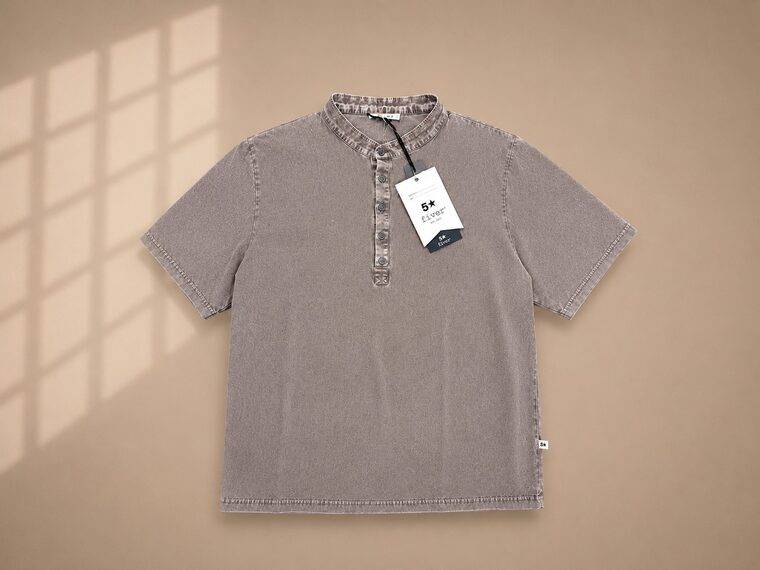
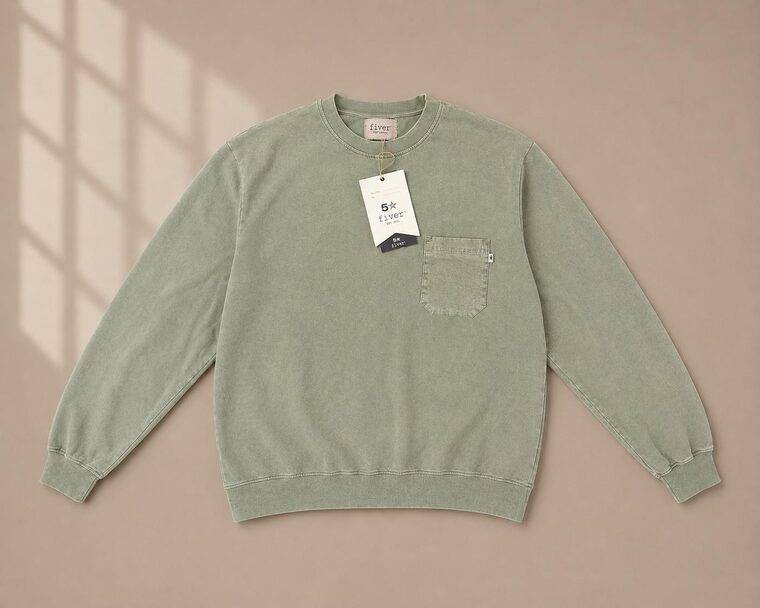
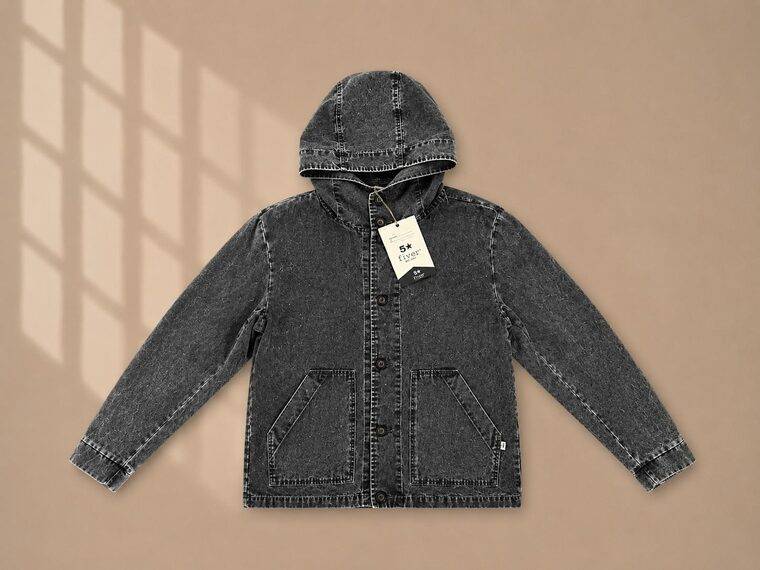
A finished garment goes into an industrial drum together with pumice stone — a light, porous, abrasive volcanic rock. The drum turns, the stone hits the fabric, surface fibre breaks, colour gives way where the stone strikes hardest. Water, detergent and temperature do the rest.
It is a mechanical treatment, not a chemical one. That is why the wear is never even: it gathers on seams, hems, pockets, wherever the garment is most exposed. Two pieces from the same lot never come out identical — and that is exactly the point.
Processes
The fabric loses stiffness and gains drape. Rigid denim becomes wearable; fleece softens without losing body.
Fuzz appears, the surface goes matte. It is the difference between a garment that «looks washed» and one that has been.
Dyes lift and shift toward grey. On garment-dyed pieces the effect is sharper still, because the colour sits on the surface.
Seams and hems become more visible, edges wear. The garment gains character without looking broken.
Processes
It works where there is coarse fibre to wear down. On fine fabrics the stone damages rather than improves.
The classic case and the most recognisable result. This is the process that built denim aesthetics.
Lighter wear, much softer hand. Works well on workwear and cotton jackets.
With light stone and short cycles, to soften without breaking through. Grade has to be dosed carefully.
Not done. Stone ruins the fibre. These go through enzymes or soft finishing only.
Processes
There is no single «stone wash»: there is a scale. The right grade depends on fabric, starting colour and where the brand sits.
Softens, removes stiffness, lifts colour slightly. The garment stays clean and shop-ready.
Visible wear on seams and edges, colour clearly knocked back. The grade you see across denim collections.
Heavily abraded surface, faded colour, sometimes rips. It changes the character of the garment and is decided with the client.
Grade is never promised over the phone: it is fixed on a sample before production is committed.
Processes
Confezione Nova is a garment manufacturer, not a dyehouse. We cut and sew in Prato; stone wash runs at the specialist dyehouse we have worked with for years — that is where the drums, the stone and the experience to dose the grade actually are.
This is how Italy works: cutting and sewing, and dyeing and washing, are two different trades with different machinery. Neither is «the real» producer. What we add is control of the whole cycle — the garment leaves our hands and comes back washed, and one person answers for it.
Processes
Stone is not the only route, and often not the right one on its own.
The best result is usually a sequence: stone for the hand, enzymes for the surface, grinding for the edges. It is decided on the garment, not in a catalogue.
Got a garment to stone wash?
Send us the details